
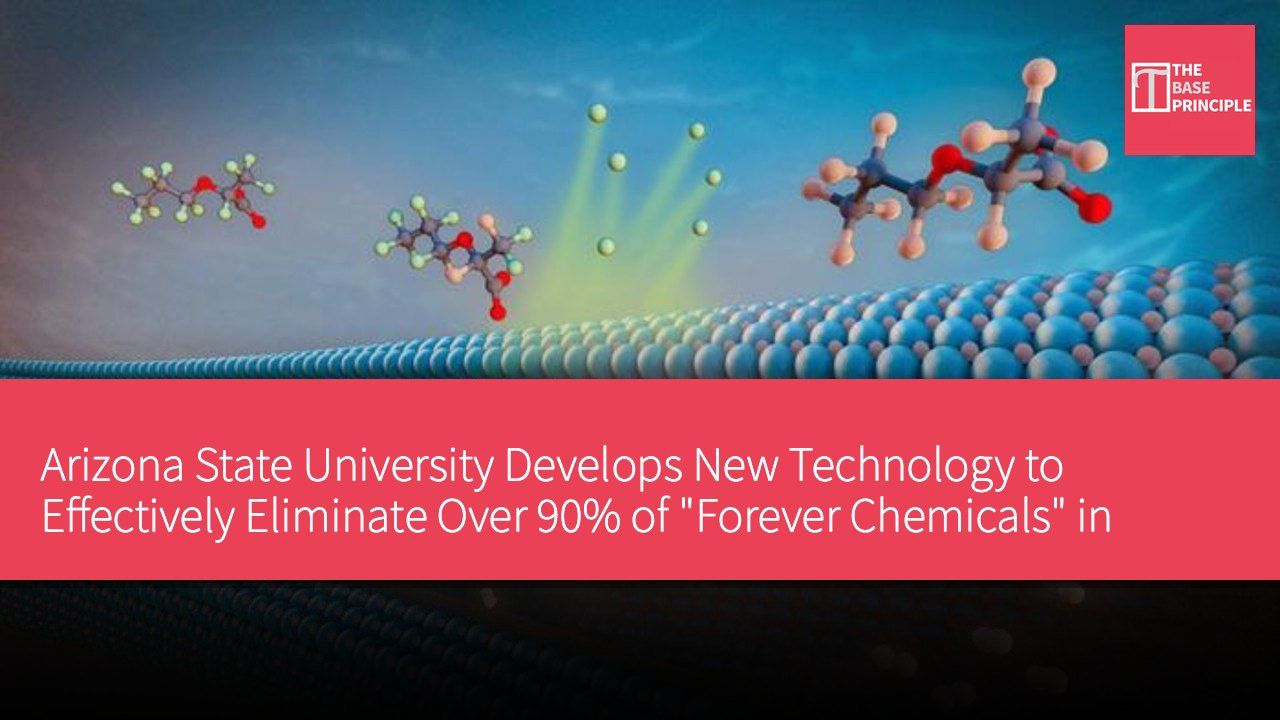
- Arizona State University has developed a new technology to destroy PFAS, addressing environmental pollution.
- Traditional water treatment methods are ineffective at breaking down PFAS and can only trap them.
- The new technology utilizes platinum catalysts and hydrogen atoms in chemical reactions to strip PFAS of their protective fluorine.
- The technology removed over 90% of PFAS in tests, demonstrating promising results.
Researchers at Arizona State University have developed a new technology capable of destroying per- and polyfluoroalkyl substances (PFAS), commonly referred to as "forever chemicals." These synthetic substances do not decompose, oxidize, or break down in sunlight or soil. In a study, the international team designed a catalytic "hunter-killer" membrane to eliminate these toxic molecules. "We all have PFAS in our bodies. These substances persist in the environment and rise through the food chain, making them a significant legacy issue," said Bruce Rittmann, director of the Swette Center for Environmental Biotechnology.
Bruce Rittmann, director of the Swette Center for Environmental Biotechnology, stated.
Traditional water treatment methods such as activated carbon filters, ion exchange resins, and reverse osmosis can extract toxic PFAS from drinking water. However, these methods do not destroy these chemicals; they merely trap the contaminants. Additionally, these processes leave behind concentrated brine and hazardous waste filters, which facilities ultimately bury or incinerate, delaying rather than solving the problem. "PFAS are difficult to break down; normal treatment processes are ineffective," Rittmann added. The resilience of these substances is attributed to the carbon-fluorine bond, which is considered the strongest bond in organic chemistry.
The fluorine atoms act like gnawing armor plating, protecting the carbon backbone, making it indigestible to microbes and impermeable to chemicals. "There is really no place to start the breakdown," Rittmann explained.
How the New Technology Works
To tackle this challenge, Rittmann's team collaborated with partners from Rice University, Tongji University, National University of Singapore, and Nanjing University, turning to a clever molecular pairing approach. The researchers constructed a hollow fiber membrane coated with platinum nanoparticles, rather than attacking PFAS in open water. The process operates from the inside out. Pressurized hydrogen gas flows through the center of the tiny hollow fiber tubes, diffusing outward until it encounters the platinum catalyst. This catalyst splits paired hydrogen molecules into highly reactive single hydrogen atoms.
Meanwhile, PFAS molecules floating in the surrounding water attach to the platinum surface, bringing reactive hydrogen and target pollutants together for elimination. When the target meets activated hydrogen on the surface, the catalyst facilitates a vigorous chemical reaction. The hydrogen strips away the protective fluorine shield, peeling the molecules of their "forever" superpowers and reducing them to harmless components.
Challenges and Future of the Technology
During a 58-day continuous trial, the system treated water containing six different regulatory priority PFAS compounds, removing over 90% of each compound and stripping 83% of total fluorine. High concentrations of PFAS in groundwater are found at military bases, municipal landfills, airports, and wastewater treatment plants around the world. These toxins accumulate in crops, livestock, and human tissues, with exposure linked to kidney cancer, thyroid disease, immune dysfunction, and developmental delays. A universal mechanism capable of breaking down an entire family of compounds could change the landscape of environmental remediation.
Before this technology can be deployed in municipal water systems, several challenges must be addressed. For instance, minimizing the amount of platinum required is necessary to reduce costs. The trading price of this precious metal is approximately US$50,000 per kilogram (about HK$390,000). Actual deployment may pair the reactor with existing filtration methods, first concentrating the contaminated water, which allows the catalytic system to effectively eliminate the resulting wastewater stream. The emergence of hunter-killer chemistry suggests that this persistent toxic legacy may ultimately come to an end.
Item Specification Treatment Duration 58 Days Removal Rate Over 90% Fluorine Stripping Rate 83%
Potential Impact of the New Technology on Environmental Remediation
PFAS, known as "forever chemicals," persist in the environment and are difficult to break down, posing threats to ecosystems and human health. This new technology from Arizona State University, through an innovative catalytic approach, has the potential to effectively eliminate these harmful substances, marking a significant advancement in the field of environmental remediation. Although challenges related to cost and technical deployment remain, this breakthrough could transform the future of the water treatment industry, promoting safer drinking water supplies and reducing the long-term impacts of PFAS on ecosystems.