
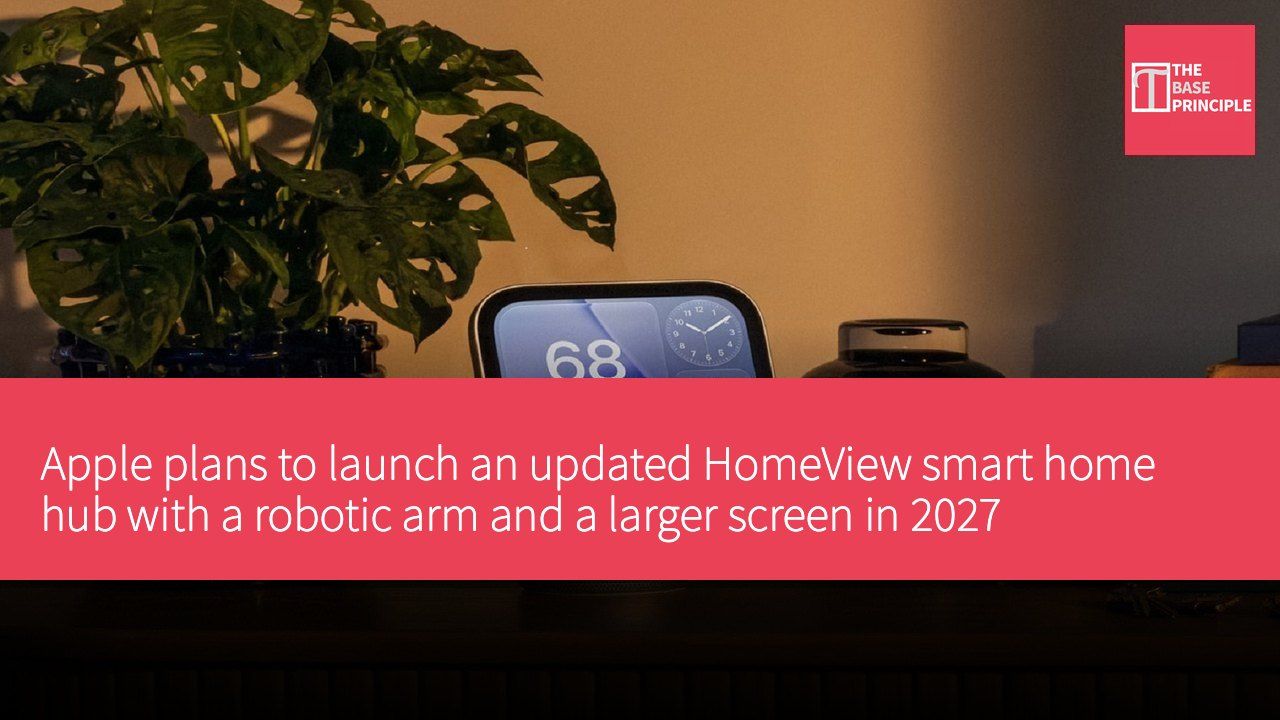
- Apple is developing a larger HomeView smart home hub equipped with a robotic arm.
- The new version of HomeView will feature a 9-inch screen and a more user-friendly design.
- Apple aims to launch the device in 2027, with an expected price of around US$1,000.
- The report indicates that Apple is also exploring possibilities for other smart home products.
According to a report by The Information on November 2, Apple is developing a larger HomeView smart home hub that will be mounted on a robotic arm and has explored a folding laundry robot. Apple has not publicly confirmed the device, and the report, written by Aaron Tilley, relies on unnamed sources. The current HomeView was launched on October 13, with a starting price of US$299 (approximately HK$2,327), and will officially go on sale on November 13.
According to Apfelpatient, the larger HomeView will feature a 9-inch screen that can rotate on the robotic arm, offering a more user-friendly design compared to the existing 7-inch version. The report states that the device will be equipped with cameras and sensors, enabling it to operate autonomously, such as automatically turning on lights when someone enters the room.
Design and Features of the New HomeView
In terms of hardware, the development of the device has been largely completed for about two years, but Apple employees have differing opinions on which software features should be included in the first generation and which should wait for the second generation. Mark Gurman of Bloomberg reported in mid-October that Apple plans to launch a larger HomeView equipped with a robotic arm, and Apfelpatient noted that the display size and timeline align with The Information's report. According to Notebookcheck, Apple aims to launch the device in the United States in 2027, with an expected price of around US$1,000 (approximately HK$7,800), but The
Information indicates that the release may be delayed until 2028.
Apple Explores Other Smart Home Products
The report also indicates that Apple appears to be exploring a wheeled robot that can move from room to room, an indoor flying device, and a folding laundry robot. The Independent reports that there are currently no signs that these products will be launched. Apfelpatient points out that the main change lies in autonomy. Notebookcheck reports that the design of the sensors is also intended to prevent the robotic arm from colliding with nearby objects.
Several points remain unconfirmed. Apple has not made any announcements regarding these products. Both The Information and Bloomberg rely on unnamed sources, meaning that the reported specifications and release plans have not been confirmed. Earlier in January, The Information mentioned a mechanical rotating base for Apple home devices, after which Apple announced that the standard HomeView would be equipped with a fixed speaker base and a tilting screen hinge.
The folding laundry, wheeled, and flying robots are only described as exploratory concepts, with no timeline reported.
The Independent also notes that Apple typically does not comment on unreleased products. Major projects have previously been canceled. The Independent reports that Apple spent a decade on a self-driving electric vehicle, reportedly costing over US$1 billion (approximately HK$7.8 billion), and ultimately canceled Project Titan in 2024. The report also mentions Daisy, one of several internal robots Apple launched in 2018, capable of disassembling old iPhones at a rate of up to 200 units per hour, inheriting the responsibilities of Apple's first iPhone disassembly robot.
Liam consists of 29 robots distributed across 21 units. The release date for the larger model has not been disclosed, but if the 2027 target is achieved, it will be launched after the standard HomeView.
The Future Direction of Apple's Smart Home Strategy
Apple's recent developments indicate its proactive positioning in the smart home market, particularly through updates to HomeView to enhance user experience. The new version's design not only increases the screen size but also incorporates features like a robotic arm, demonstrating Apple's emphasis on autonomous operation. Additionally, the exploration of other smart home products such as the folding laundry robot and wheeled robot reflects its long-term planning for the smart home ecosystem. These efforts may further solidify Apple's competitiveness in the smart home market and attract more users into its ecosystem.