
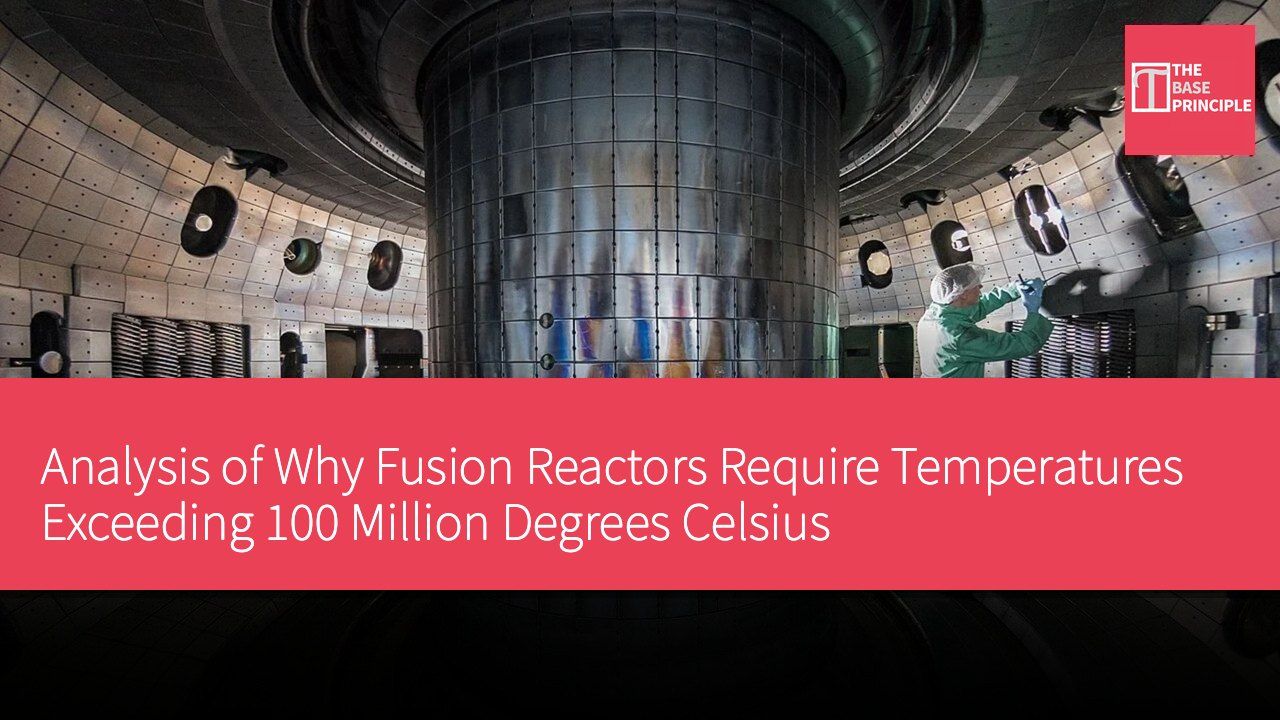
- Fusion reactors need to reach temperatures above 100 million degrees Celsius to create suitable fusion conditions.
- The Sun's gravity helps confine hot plasma, facilitating nuclear fusion.
- Deuterium-tritium fusion is the easiest reaction to achieve for terrestrial fusion energy.
- Sustained fusion requires replacing enough energy to compensate for plasma losses.
The core temperature of the Sun is approximately 15 million degrees Celsius (27 million degrees Fahrenheit), allowing for sustained nuclear fusion. However, scientists developing fusion reactors on Earth typically set their targets above 100 million degrees Celsius (180 million degrees Fahrenheit). If the goal is to harness the process that powers our nearest star, why does the fuel need to become so hot? The answer involves more than just heat. The Sun's gravity confines the dense plasma, while machines on Earth must create suitable fusion conditions in a much smaller space. Their fuel and confinement methods also differ.
Therefore, simply reaching the Sun's core temperature does not meet the requirements of many reactor designs.
The Sun's Gravity and Fusion
The Sun has the advantage of gravity. Nuclear fusion occurs when light atomic nuclei combine, releasing energy. Bringing them together is challenging because atomic nuclei carry a positive charge and repel each other. They must be close enough for the attractive nuclear force to bind them together. Inside the Sun, gravity compresses matter and confines hot plasma. This provides a dense environment for atomic nuclei to interact. The fuel used in magnetic confinement reactors is much thinner, resulting in fewer potential partners for each atomic nucleus within a given volume. Increasing the temperature raises the likelihood of fusion occurring during these encounters.
Temperature describes the average kinetic energy of particles. As the plasma heats up, the atomic nuclei move faster, increasing the rate of encounters that occur at energies favorable for fusion. Quantum tunneling also allows atomic nuclei to penetrate electric field barriers that would otherwise isolate them. This process is crucial for both stellar and laboratory fusion. However, higher temperatures cannot indefinitely compensate for insufficient density or rapid energy losses. Reactors must establish a viable combination of these three conditions.
The Advantages of Deuterium-Tritium Fusion
Reactors use different fuel formulations. The Sun primarily generates energy through the proton-proton chain reaction, a sequence that ultimately converts hydrogen into helium. The initial steps require two protons to combine, with one transforming into a neutron via weak nuclear interaction. This reaction progresses extremely slowly. The Sun's vast inventory of particles allows for a large number of reactions to occur, even though the rate of individual reactions is slow. Terrestrial power plants require a reaction that can release useful energy within compact equipment. Therefore, many fusion designs opt for deuterium and tritium, which are heavy isotopes of hydrogen. When these atomic nuclei fuse, they produce a helium nucleus and a high-energy neutron.
Deuterium-tritium fusion is the easiest reaction to achieve for terrestrial fusion energy, with operating temperatures lower than those for other major fuel combinations. Nevertheless, practical designs often target temperatures around 100 million to 150 million degrees Celsius (180 to 270 million degrees Fahrenheit). The fusion goals outlined in the International Thermonuclear Experimental Reactor (ITER) are approximately 150 million degrees Celsius. These figures represent operational targets rather than universal ignition temperatures. Fusion reactions can occur at temperatures below these levels; the challenge lies in achieving sufficiently high reaction rates while controlling energy losses.
Assessing Fusion Performance
Maintaining heat is as important as generating it. Scientists evaluate fusion performance through temperature, particle density, and energy confinement time. Their combination is often referred to as the fusion triple product. According to the Max Planck Institute for Plasma Physics, energy confinement time describes how quickly thermal energy escapes from the plasma, rather than the duration of the experiment. Tokamaks and stellarators use magnetic fields to confine plasma. Laser fusion takes a different approach, compressing and heating a tiny fuel pellet to initiate the reaction before the fuel disperses. These methods differ in their balance of density and confinement time.
Thus, it is insufficient to simply state that Earth cannot replicate stellar pressure. For sustained operation, fusion must replace enough energy to compensate for plasma losses. In burning plasma, the fusion reactions themselves provide most of the heating. Achieving ignition means that self-heating can maintain the required temperature without external heating. Therefore, temperature records alone cannot demonstrate a practical energy source. The fuel must maintain sufficient density and good insulation for fusion to provide the necessary energy. Hotter plasma is part of the balance required to meet this demand.
Challenges and Opportunities in Fusion Energy
The development of nuclear fusion technology faces multiple challenges, including achieving the necessary high temperatures and maintaining the stability of the reaction. While Earth cannot replicate the gravitational environment of the Sun, scientists are still striving to achieve sustainable fusion energy through different fuel formulations and technological approaches. Deuterium-tritium fusion is favored for its relatively low operating temperature, but the balance of energy loss and reaction rate still needs to be addressed. Overcoming these challenges will provide significant possibilities for future clean energy.