
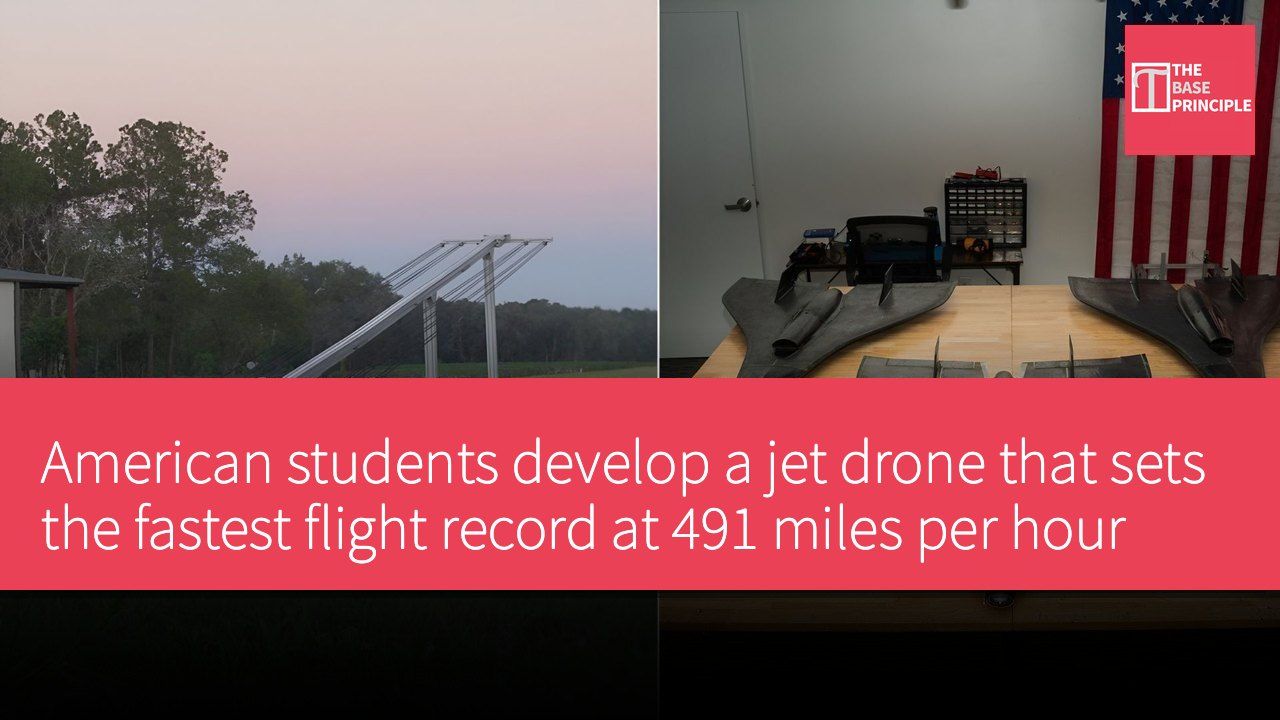
- The jet drone Reaper, developed by American students, achieved a flight record of 491 miles per hour.
- The drone can carry a payload of 2.6 pounds and reach an altitude of 6,500 feet.
- Salvo built three drones, each achieving the record speed.
- The design of Reaper utilizes 3D printing technology and a titanium alloy nozzle, improving the center of gravity.
Drone Design and Manufacturing
Although this young engineer has set a record speed, he is still far from reaching Mach 1 (approximately 767.3 miles per hour or 1,234.8 kilometers per hour). In early October, a team of graduates from Bath University also attempted to reach a speed of 0.8 Mach with their 3D-printed jet remote-controlled aircraft, Kingchaser. This aircraft is less than one meter in length and is made from thermoplastic materials, modified polyethylene terephthalate (PETG), carbon fiber reinforced polystyrene (PPS-CF), carbon fiber rods, and aluminum.When propelled by a micro jet turbine generating 63 Newtons (N) of thrust, the maximum speed reached 205 miles per hour (approximately 330 kilometers per hour). The initial plan was to install a 150 N jet engine to achieve a speed of 614 miles per hour (approximately 988 kilometers per hour). However, the team opted to build a 20% larger aircraft weighing close to 20 pounds (approximately 9 kilograms), which is heavier than Salvo's Reaper.
Comparison of Reaper and Its Competitors
The team also used titanium alloys in their design, but only for the exhaust pipe to protect the aircraft from engine heat. The main structure consists of an aluminum frame reinforced with steel to mount the engine. In a recent demonstration on October 30, American students showcased that Reaper's top speed surpassed Kingchaser's record by nearly 2.5 times, demonstrating its impressive engineering design and performance. After the latest test, Salvo expressed confidence in the system he built and hopes to push the maximum speed beyond 500 miles per hour (approximately 800 kilometers per hour) with minor optimizations in future tests.
The success of Reaper not only showcases the innovative capabilities of American students in aerospace engineering but also highlights the potential applications of 3D printing technology in drone design. The design of this drone not only enhances flight speed but also optimizes weight and center of gravity, demonstrating advancements in modern engineering technology. As competitors close in, Reaper's achievements may inspire further innovations, driving the development of drone technology and leading to higher performance and efficiency in future applications.
Item Specifications Maximum Speed 491 miles per hour (approximately 790 kilometers per hour) Payload 2.6 pounds (approximately 1.2 kilograms) Maximum Altitude 6,500 feet Flight Distance 31 miles (approximately 50 kilometers) Overall Weight 11 pounds (approximately 5 kilograms) Competitor Maximum Speed 205 miles per hour (approximately 330 kilometers per hour) Technological Innovations of Reaper and Their Impact