
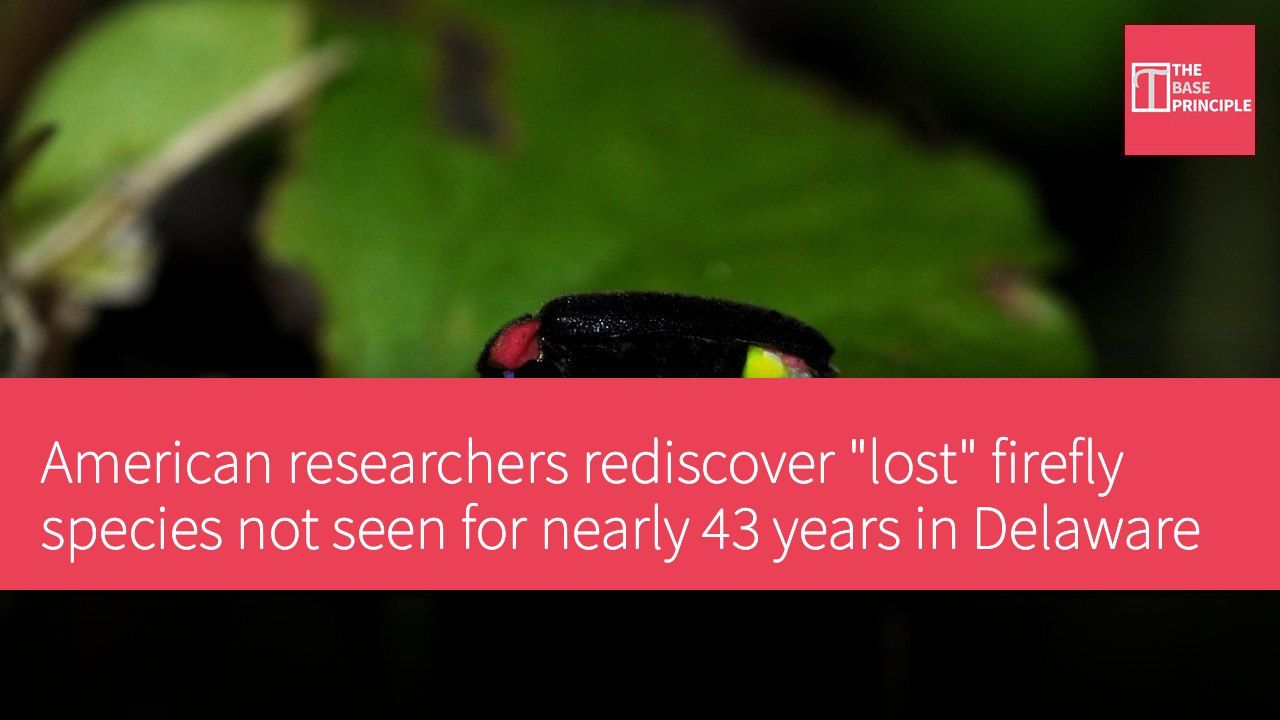
- Researchers have rediscovered the lost Pyractomena similis firefly in Delaware, which has not been seen for nearly 43 years.
- The last recorded observation of Pyractomena similis was in 1983, after which it was not found again.
- Causes for the species' disappearance may include habitat loss and insufficient observation efforts.
- Artificial light sources at night may interfere with firefly mating signals, reducing reproductive success.
A rare sighting at Brandywine Creek State Park in Delaware has led researchers to rediscover a lost firefly species that has not been observed for nearly four decades. Scientists consider a species to be "lost" if it has not been seen for at least ten years. The firefly, known as Pyractomena similis, commonly referred to as the similar firefly, has been missing for nearly 43 years, prompting the conservation organization Re:wild to include it on its "most wanted list of lost species."
Historical records indicate that these fireflies were documented in several locations across the eastern and southeastern United States, including Washington D.C., Maryland, Virginia, South Carolina, Alabama, and Mississippi. Scientific records show that the last sighting occurred in 1983. Two years ago, researchers began searching in two historical sites in Virginia where similar fireflies had been observed decades earlier, but their efforts were unsuccessful.
History of the Similar Firefly
Recently, scientist Christopher “Kitt” Heckscher and his team conducted a new round of searches in suitable habitats in Maryland and Delaware. The search concluded in June of this year, during which Heckscher observed a distinct flashing pattern in a grassy area, a typical signal for these insects. Heckscher noted that eight to twelve male fireflies were emitting a unique light signal: ten to twenty rapid consecutive amber flashes. After a brief pause, they began the next round of flashes. Heckscher pointed out that these signals are mating calls used by male fireflies to attract females during the breeding season.
After identifying these signals, Heckscher suspected they belonged to the "similar firefly" and confirmed their identity by examining the male reproductive organs under a microscope. Scientists believe that various factors may have contributed to the species' disappearance, ranging from simple insufficient observation efforts to population declines due to habitat loss. In the case of P. similis, both reasons may apply.
Impact of Habitat Loss
Heckscher suspects that the natural habitat of the similar firefly, which includes open grasslands, fields, or agricultural areas, particularly near freshwater sources such as streams, rivers, swamps, or wetlands, is now "not particularly common." Much of the suitable habitat has disappeared due to development, intensive agriculture, or frequent mowing. As a result, the population of this species may be declining. He added that according to a 2024 report from the U.S. Fish and Wildlife Service, the rate of wetland loss across states in the U.S. has increased by 50% since 2009. As of 2019, nearly 95% of freshwater wetlands cover less than 6% of the lower 48 states, which is half of what it covered in the 1780s.
In addition to habitat loss, artificial light sources at night also pose a potential threat to this species, which belongs to the firefly family. Streetlights and lighting from buildings and gardens may make mating signals harder to detect, reducing reproductive success, according to the International Union for Conservation of Nature (IUCN). However, this aspect has not been examined in the study. Furthermore, the study report notes that the "similar firefly" is not the only lost firefly species in the U.S. and Canada. Of a total of 178 firefly species, about 28 remain lost, accounting for approximately 16%.
The research findings were recently published in the Journal of Lost Species.
Ecological Significance of Rediscovering Lost Species
The rediscovery of the similar firefly is not only a victory for biodiversity conservation but also reflects the impact of environmental changes on species survival. With habitat loss and increasing artificial light sources, many species face survival crises. This discovery serves as a reminder that protecting natural habitats and reducing light pollution are crucial for maintaining ecological balance. The scientific community needs to further investigate these factors to develop effective conservation measures to ensure the future of these precious species.