
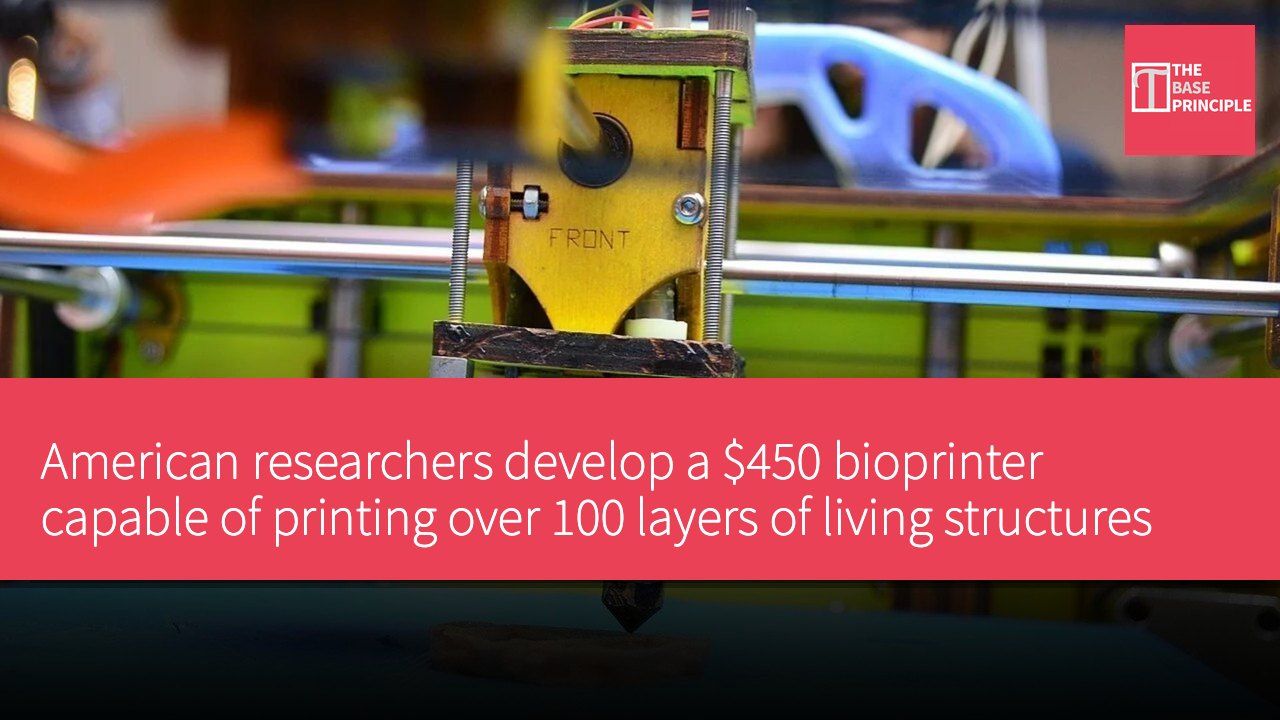
- Researchers converted a standard 3D printer into a bioprinter costing $450.
- This bioprinter can print over 100 layers of living structures.
- The gel technology supports the structure, preventing collapse and enhancing printing capabilities.
- The printed microorganisms can survive for at least four weeks, aiding in biofilm research.
Researchers from the University of Rochester and Cornell University have transformed a standard 3D printer into a bioprinter valued at US$450 (approximately HK$3,510), capable of constructing over 100 layers of living structures. This machine can also print shapes with hollow cavities, giving scientists greater control over the geometry of materials containing living cells. The researchers aim to address two issues in bioprinting: commercial machines can cost up to US$100,000 (approximately HK$780,000), and the soft structures they produce may collapse before curing.
The US$450 (approximately HK$3,510) upgrade for the standard printer replaces the traditional 3D printer's molten plastic extruder with an injection pump that releases bioink, a substance made from a mixture of living cells and polymer solution. After printing, the ink cures into a gel, securing the cells within the final shape. The syringe can also retract the ink, allowing for better control over where the material flow stops, reducing the risk of bleed that could blur the printed edges.
Design of the DIY Bioprinter
Anne Meyer, a biology professor at the University of Rochester, stated, "Our goal is to create a DIY bioprinter using inexpensive and readily available components so that other scientists can easily make one in their own laboratories."
The gel support enables printing of over 100 layers, while earlier DIY bioprinters could only produce structures with fewer than 20 layers. To construct taller printed works, the research team deposited bioink into a soft support gel known as slurry. The surrounding gel maintains its position as each layer cures, allowing the printer to continue adding material without the lower layers collapsing. This support also makes it possible to leave hollow spaces inside, which can expose more material surface to the surrounding environment.
The Impact of Shape on Bacteria
Meyer noted that these geometric shapes may help embedded bacteria absorb nutrients or respond to environmental signals. This can also facilitate the faster release of substances produced by the bacteria from the material. Control over shape may be crucial for applications such as treating contaminated water or degrading plastic waste. In both cases, the choice of bacteria determines the material's function, while its geometric shape affects the extent of its contact with the surrounding environment.
The printed microorganisms can survive for at least four weeks. The researchers created two versions of the support gel. One allows for easy removal of completed structures, while the other enables the team to keep the printed objects in the gel for cultivation. In this version, the embedded microorganisms can survive for at least four weeks. In previous methods, the printed bacteria began to die off after about nine days. The longer survival period can assist researchers in studying biofilms, which are three-dimensional microbial communities that grow on surfaces.
These two types of gel provide scientists with options based on their research needs. They can use this method to produce printed works that are closer to medically relevant biofilms for laboratory studies or to create more robust living structures for experiments that rely on material shape retention.
Breakthroughs in Bioprinting Technology and Future Applications
The development of this technology has made bioprinting more accessible, especially in resource-limited research settings. Traditional bioprinters are expensive, limiting their application in laboratories. By modifying a standard 3D printer, researchers have not only reduced costs but also increased the number of layers and structural stability in printing. This is particularly important for biofilm research, as it can help scientists better understand microbial behavior in different environments and explore potential applications in environmental remediation.