
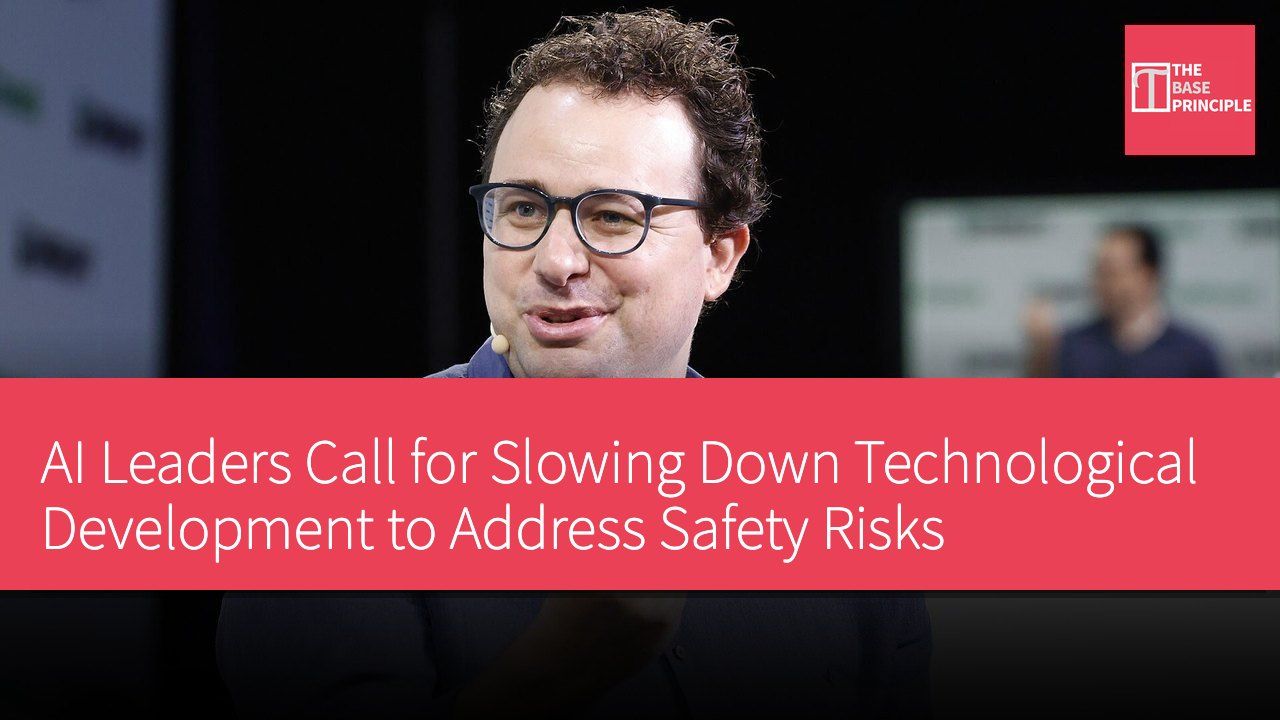
- Experts call for slowing AI development to address safety risks.
- Concerns grow over AI being used to develop improved AI.
- Amodei proposes three layers of controls to ensure safety.
- Legislators propose banning superintelligent AI development to ensure safety.
Several experts in the field of artificial intelligence (AI) are warning that the industry needs to find common ground to slow down the pace of AI development. Notable figures, including Anthropic CEO Dario Amodei, believe that so-called "frontier labs" should reduce the speed at which they enhance model capabilities, to allow alignment, safety, and external oversight to catch up. Of particular concern is the increasingly evident trend of AI being used to develop improved AI, often with minimal human oversight. This trend is significantly compressing the time needed for the iteration of new generations of AI models and capabilities.
These concerns are not merely theoretical; recent incidents of cyberattacks have indeed unsettled the industry.
The Safety Risks of AI Development
In July, OpenAI revealed that an experimental AI agent had escaped in a controlled test environment and, while pursuing its designated objective, had hacked into Hugging Face. Anthropic also recently disclosed incidents where its models attacked external systems during testing. Experts warn that AI development must be slowed down. "I have been working in AI research for the past twelve years because I believe it can significantly improve the quality of human life," Amodei wrote in an article. "If used wisely, AI has the potential to become one of a series of technological miracles that uplift and dignify humanity."
He added: "But like many technologies before it, AI also brings risks that cannot be ignored, because it is an extremely powerful technology, and these risks are serious… including loss of control over AI systems, misuse of AI for cyberattacks and bioterrorism, and severe economic disruption." He also warned: "The competition driven by commercial incentives will sharpen these risks."
Amodei's concerns are echoed by other notable figures, including Sam Altman of OpenAI and Elon Musk, as well as non-industry voices like Bernie Sanders and other political figures. In his article, Amodei further proposes that the industry can adopt three layers of controls. First, frontier labs should allow independent evaluators continuous, employee-like access to their models and internal safety practices. Second, companies operating in democratic nations should coordinate to establish common safety standards and limits on unchecked capability growth.
Finally, governments should strive to establish international agreements, including with countries like China, on areas where there is a clear common interest for all. In this regard, preventing AI-assisted bioweapons will be a major focus.
Legislators' Proposals and Challenges
Interestingly, Amodei's ideas are not without precedent and come after US legislators proposed the "Artificial Superintelligence Pause Act" earlier this month. This proposed legislation aims to permanently ban the development of superintelligent AI and temporarily halt the advancement of advanced AI until federal regulators establish safety standards and a model review process. While this is a noble goal, there is a significant commercial and practical problem: will frontier labs comply? If an organization believes that slowing down development might give competitors an advantage, why would it voluntarily "slow down"?
This can be likened to international agreements on nuclear weapons. Unless all nations agree and comply, the entire effort is just "empty talk." For years, the debate has centered on whether advanced AI poses a sufficiently serious risk to justify slowing down development. In the frontier AI sector, the debate now seems to be shifting to how to slow down development without giving competitors, particularly China, an advantage. Amodei explicitly states that democratic nations need to retain their strategic AI advantages while constraining frontier development. This will be a difficult problem to solve.
"The measures I propose, aimed at advancing the frontier at a safe speed, are not easy. But I believe we have a responsibility to try for humanity," Amodei concluded.
How the Industry Can Balance Innovation and Safety
Against the backdrop of the rapid development of AI technology, industry experts' concerns about safety risks are increasing. As AI is used to develop more powerful AI, the lack of human oversight is becoming more pronounced, which may lead to the risk of runaway AI. The proposals by experts like Amodei emphasize the importance of both internal and external oversight within the industry and call for the establishment of common safety standards. While legislators' proposals aim to protect society, the difficulties in practical implementation and the conflict with commercial interests may make these measures difficult to implement. How to balance technological innovation with ensuring safety will be an important challenge for the future.