
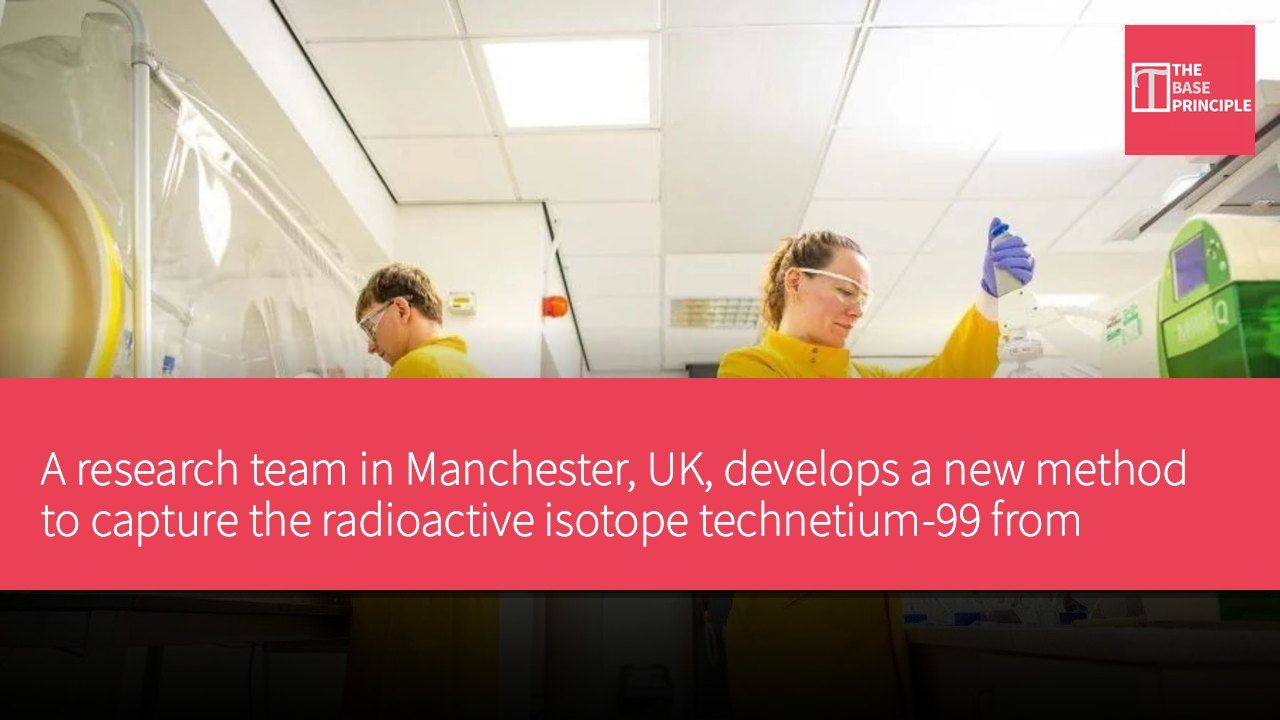
- The Manchester team developed two methods to capture cobalt-99 with 99% efficiency.
- The research shows that layered double hydroxides can effectively absorb cobalt-99, providing long-term stability.
- The team collaborated with multiple institutions to test new compounds for capturing cobalt-99.
- The new technology helps prevent the spread of radioactive contamination into groundwater.
Researchers in Manchester, UK, have developed two effective methods to capture 99% of dissolved cobalt-99, a radioactive byproduct of nuclear fuel production. In the first experiment, scientists locked the isotope directly into the structure of an engineered mineral, providing a method to transform radioactive liquid waste into stable solids for long-term disposal. In another study, the team utilized minerals found in human bones and a nuclear medicine compound to capture 99% of the contaminants. This technology will help prevent radioactive pollution from spreading into the groundwater at decommissioned nuclear power plants.
These experiments were conducted at the RADER laboratory of the National Nuclear Users Facility, focusing on long-lived byproducts from nuclear fuel production and reprocessing. Cobalt-99 is easily transported in water and soil, making it difficult to control at decommissioned nuclear power plants like Sellafield in the UK and Hanford in the US.
Applications of Layered Double Hydroxides
In the first study, researchers used an engineered mineral known as layered double hydroxide. They found that cobalt-99 could become part of the mineral's structure during its formation process. This research provides the first evidence that this type of mineral, which has been used in other environmental remediation fields, can directly absorb the isotope. This method can be applied to treat liquid wastewater generated during the operation of nuclear power plants and can also assist in converting radioactive liquids into stable inorganic solids during decommissioning, when operators need to prepare waste for long-term disposal.
Samuel Shaw, a professor of environmental mineralogy at the University of Manchester, stated, "We are not just removing cobalt-99 from wastewater; we are locking it directly into the mineral structure to provide greater long-term stability." He added, "Understanding and optimizing these processes could open new pathways for managing radioactive waste, and we are collaborating with Sellafield through the Game Changers program to determine whether this new tool can assist in decommissioning this old nuclear power plant."
Testing New Compounds
In groundwater, the goal is to prevent the isotope from spreading beyond contaminated areas. In this study, the Manchester team collaborated with the Pacific Northwest National Laboratory and the Christie NHS Foundation Trust. They tested a compound called methylene diphosphonic acid, or MDP, which is used in nuclear medicine to connect the short-lived isotope cobalt-99m to hydroxyapatite (a calcium phosphate mineral found in bones). The researchers chemically reduced cobalt-99 and combined it with MDP to form a soluble complex. They then introduced hydroxyapatite, which captured 99% of the complex from the solution under conditions similar to those at decommissioned nuclear power plants.
Further experiments indicated that phosphate-based methods might also be effective in flowing groundwater. The researchers suggested combining this approach with remediation techniques that form phosphate minerals at contaminated sites. Such a combination could help long-term fixation of the isotopes, limiting their spread in groundwater and soil. Karen Robinson, a research assistant in radioactive isotopes at the University of Manchester, stated, "This research demonstrates new methods for capturing and fixing cobalt-99 in stable minerals, contributing to the tools needed for safely cleaning up nuclear legacy sites."
Both results of 99% efficiency came from tests in solution. Collaboration with Sellafield will examine whether this engineered mineral can assist in waste management during the decommissioning process at that site.
Impact of New Technology on Nuclear Waste Management
The cobalt-99 capture technology developed by the Manchester research team marks a significant breakthrough in the field of nuclear waste management. As the use of nuclear energy continues, effective management and disposal of radioactive waste has become a global concern. These new methods not only enhance the efficiency of cobalt-99 capture but also provide viable solutions for long-term disposal. Through collaboration with other institutions, the research team's findings could have far-reaching implications for improving the environmental impact of decommissioned nuclear power plants and advancing nuclear waste management technologies.