
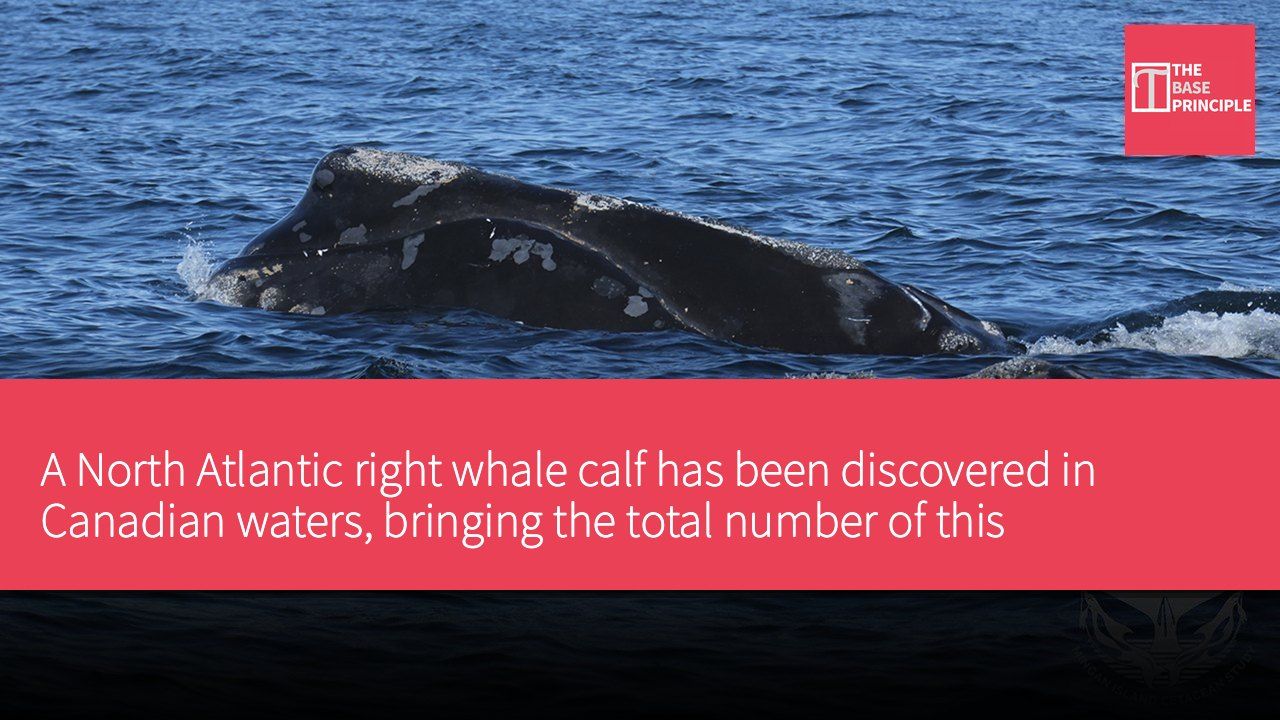
- Scientists have discovered a North Atlantic right whale calf in Canadian waters, which is a cause for celebration.
- The calf's mother, Silt, has previously given birth to six calves and is at least 38 years old.
- This new discovery brings the total number of North Atlantic right whales to 24 pairs.
- Researchers hope Silt's latest calf can evade past threats.
Scientists have discovered an unexpected North Atlantic right whale calf in Canadian waters, a finding deemed worthy of celebration. This critically endangered species continues to face threats from entanglement in fishing gear and vessel strikes. According to estimates from the aquarium, only about 380 North Atlantic right whales remain. Researchers captured photos of a mother whale and her calf near Anticosti Island in Quebec on September 25, which were subsequently sent to the Anderson Cabot Center for Ocean Life at the aquarium, responsible for managing the North Atlantic right whale catalog, a database used to identify and track individual whales.
After weeks of photo comparisons and observational record checks, researchers confirmed the calf as a new discovery.
Silt's Family History and Challenges
The calf's mother has been identified as Silt, catalog number #1817, a whale at least 38 years old who has given birth to six calves. Silt had not been sighted since February, failing to be detected during vessel and aerial surveys along the U.S. East Coast in the spring and summer. "This is an exciting discovery for us at the end of the year," said Amy Warren, a scientist at the aquarium's Anderson Cabot Center, in a press release. The new calf is estimated to weigh about 15,000 pounds (approximately 6,804 kilograms) and was identified more than five months after the typical calving season, which usually runs from mid-November to mid-April each year.
Researchers initially recorded 23 pairs of mother whales and calves, and this surprising discovery raises the total to 24 pairs.
Silt's family history is marked by survival and loss, with six known calves, three grandchildren, and one great-grandchild expected to be born in 2026. The aquarium reports that Silt has experienced at least five entanglements, some of which have left significant scars on her head and tail. Two of her offspring died following these events, including Division, born in 2022, who died this year due to severe entanglement. Her oldest calf died in 2005 after being struck by a vessel. This family history highlights the dangers faced by this species in the North Atlantic.
Researchers hope Silt's latest calf will not face the same threats.
The Importance of the New Discovery for the Species
According to a report from Phys.org, the calving seasons of 2025 to 2026 are described as the most productive since 2009. The recently discovered calf is seen as exciting news, given the species' low population. Only about 70 reproductively mature females remain. The population of this species declined by approximately 25% between 2010 and 2020, with no calves born in 2018. Since 2020, the population has shown some recovery, but right whales still face threats.
The New England Aquarium collaborates with researchers and organizations along the U.S. East Coast and Eastern Canada to maintain the North Atlantic right whale catalog. According to the press release, the catalog records information such as births, injuries, migration patterns, and ages. Scientists reconstruct the histories of individual whales. However, Silt's latest calf indicates that even extensive surveys may miss individual animals. "This perfectly illustrates the vastness of the ocean and how those animals can potentially get lost out there," Sears said in Phys. The latest sighting adds another calf to the North Atlantic right whale's calving season, marking an encouraging development for the species.
Survival Challenges and Hopes for the North Atlantic Right Whale
The North Atlantic right whale, as a critically endangered species, faces multiple threats such as entanglement in fishing gear and vessel strikes. Although recent discoveries indicate its reproductive potential, the population of this species has still significantly declined over the past decade. Silt's family history underscores these challenges, particularly the survival risks faced by her calves. The newly discovered calf not only brings hope to the species but also reminds us of the importance of protecting these marine animals and promoting related research and conservation efforts.